
The Lost Foundry
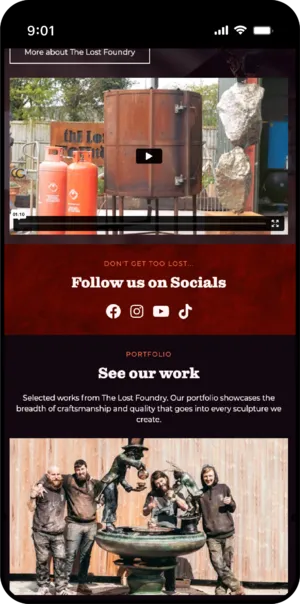
The Lost Foundry is a world-renowned fine art bronze foundry, casting public monuments and gallery pieces for artists across the globe using the ancient lost wax method. One furnace now powers three thriving businesses, and we built the brands, websites and marketing engine that let each one shine.
Devon Website | Brand | Google Ads | Email | Content | Envelope
The situation
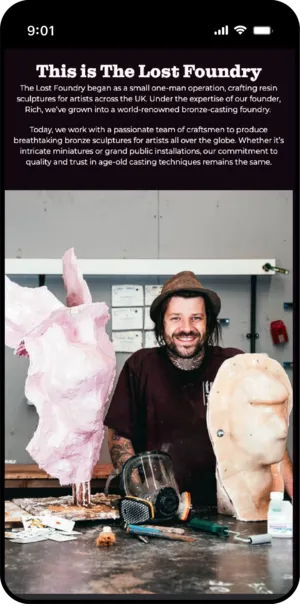
The Lost Foundry is one of those quietly world-class British businesses. Founder Rich trained in fine art for eight years before mastering the lost wax method, the same process that's been turning wax into bronze for thousands of years, and what began as a one-man operation casting for artists across the UK has grown into a renowned foundry producing breathtaking public sculptures for artists all over the globe. When the sculptor behind the Terry Jones memorial needed a foundry, this is where the work was cast. One artist client is currently on his third public sculpture project with them.
But here's what makes them really interesting: the foundry is only a third of the story.
They also teach the craft. Their bronze casting courses have people travelling from across the country to spend three, four or five days at a real working foundry, learning wax sculpting, ceramic shell, the pour and the patina from the masters themselves, and going home with their own finished bronze. The reviews glow, and the courses sell out.
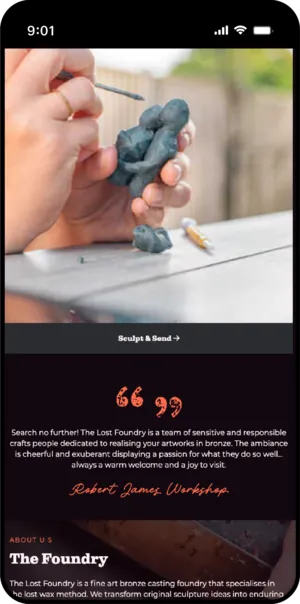
And then there's Sculpt & Send, which might be the most charming product we've ever worked on. A kit arrives with sculpting wax in it. You make something at your kitchen table, post it back, and a few weeks later your creation returns cast in solid bronze, by the same hands and the same furnace that cast the public monuments. One customer had never sculpted a thing in her life. She made a mouse, and six weeks later it came back in bronze, finished beautifully.
Three brilliant businesses, one furnace, and three completely different customers: the professional sculptor commissioning a monument, the creative soul booking a course, and someone buying the most memorable gift they'll give all year. The challenge was making sure each of those people could find their way in, and that each business could grow at its own pace without the others getting in the way.
What had to be true
Three questions before anything got built. How does one brand speak to a monumental sculptor and a Christmas gift buyer at the same time? What happens when three businesses want the marketing spotlight at different times of the year? And how do you sell something this ancient without making it feel like a museum piece?
The decisions
Sculpt & Send became a brand of its own
The kit was never really a product line; it's a different business with a different customer at a different price point, and its true competitors are the craft kit brands, not other foundries. Asking a gift buyer to find it inside a website built for fine art commissions was asking them to do work no shopper ever does.
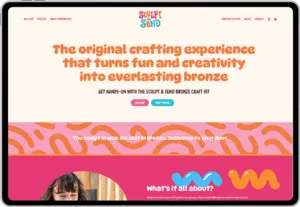
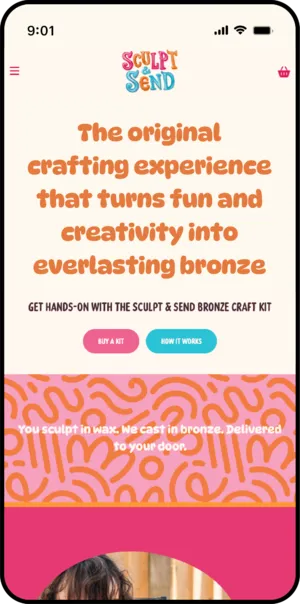
So we gave Sculpt & Send what it deserved: its own name treatment, its own joyful colour palette and type, its own brand guidelines, and its own website on its own domain. The design leans playful and warm where the foundry leans crafted and timeless, because the moment of pulling wax out of a box at your kitchen table deserves its own personality. The client's reaction to the first homepage design said it better than we could: "WOW! This has made me so happy... I can't stop looking at it!"
The two brands still share everything that matters behind the scenes, the furnace, the fulfilment, the postbag. They just stopped sharing a shop window, and both look better for it.
Marketing with three dials instead of one switch
Most businesses this size get one advertising account that moves as a single thing: turn it up, turn it down. That could never work here, because the three businesses peak at different times. January, it turns out, is course season, all new year and new skills, while the foundry itself might be flat out with commissions and wanting fewer enquiries, not more.
So we rebuilt the whole account as three instruments that play independently. Courses, foundry and Sculpt & Send each have their own campaigns, budgets and creative, fed by audiences built from the business's own customer history rather than guesswork. When the team want to push courses hard for a season while the foundry order book digests, that's now a five-minute adjustment instead of a rebuild. The structure means the marketing can follow the business, which is the whole point of having any.
Two kinds of learner, two front doors
Even within the courses, two different people were hiding. Someone travelling to Devon for five days of molten bronze and evenings under canvas is not the same person as someone buying the online mould-making masterclass to study at home. They share a word, and almost nothing else.
So the courses now open with a simple landing page that asks one question and gets out of the way, with in-person and online each getting a page that speaks properly to the person who chose it. Different intent, different page, and neither one compromised to accommodate the other.
The foundations most people never see
Some of the most valuable work on an account like this is completely invisible. Their Google Business Profile has been brought up to scratch so the foundry appears correctly everywhere local customers look. Hundreds of stray search terms have been ruled out of the advertising one by one, so the budget only chases the three audiences that matter. Customer lists from their own order history now power the targeting. And every Monday morning, a performance report lands automatically in front of the team, so the numbers are simply always there.
None of it is glamorous. All of it is the difference between a marketing engine and a marketing expense.
What’s live now?
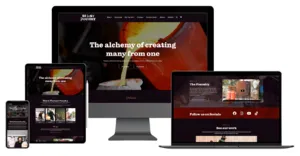
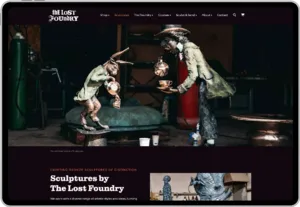
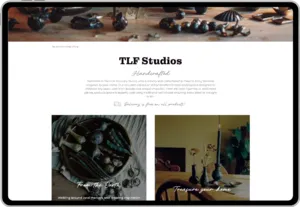
A world-class foundry with a digital presence to match: one site for the fine art and the courses, and a beautiful new brand and website for Sculpt & Send, each speaking fluently to its own audience.
An advertising account with three dials, steered by real customer data, able to follow the rhythm of the business through the year.
Email that carries their story to people who already love it, content that shares the magic of the craft, and reporting that arrives without anyone having to ask.
And a business that started as one man casting resin now running three growing ventures from a single furnace, each with its own front door.
“Sonder are a great company to work with. They are knowledgeable and skilled at all they offer and have achieved anything we've asked of them. It always seems so seamless and efficient and we always feel well looked after. Alex is on hand to help with pretty much anything we need and is always so patient with all of our ideas and next steps.”
The websites themselves are wonderful and get so many compliments, working smoothly and looking great. Even when something needs an extra look or a little tweak, they are eager to understand the goal and get it done.”
– Rich Balman, The Lost Foundry